CONFLICTOLOGY
Conflictology: Capitol is a strategic card game of deception and political intrigue for 2–6 players, orsolo against computer opponents.
Set in a dystopian Capitol, players use influence cards to gather resources, outwit opponents, and eliminate rivals through bluffing and bold moves.
Starting setup:every player begins with 2 face-down influence cards and $2M.
Open the extension in your browser and pin it to the toolbar:First locate the puzzle piece icon in the top-right corner of the browser. Click it to open the Extensions menu, then find the extension you want to pin and click the pin icon next to it. This will move the extension icon to the toolbar for easy access.
Influence Cards
The game has 18 Influence cards(6 types, 3 of each).
Every player starts with 2 cards, your influence in the Capitol. These define the actions you can take… or bluff.




The last player with any cards wins.
Protect your cards, bluff smart, and strike when the moment's right.
If you lose a card, you don't get a new one. Play wisely.
Game Actions
On your turn, you can perform one of the General actions: Income, Foreign Aid, Scandal, or use Influence cards (Character actions): Banker, Hacker, Mafia, Reporter, Judge or Police. Other players may Block or Challenge your actions. Click any action to see step-by-step scenarios.
Income
Take $1M from the Treasury. A safe and unblockable source of money.
Foreign Aid
Take $2M from the Treasury. Any player claiming the Banker may block it. The Foreign Aid claim itself can't be challenged. Only the Banker block can.
Scandal
Pay $7M to launch a scandal against a target player. They must lose 1 influence card. A Scandal cannot be blocked or challenged.
If you start your turn with $10M or more, launching a Scandal is mandatory.
Banker
Take $3M from the Treasury. Also has the power to block Foreign Aid actions by other players. Greedy but powerful.
Mafia
Steal up to $2M from a target player. If they have less than $2M, take whatever they have. Only the targeted player may block, by claiming Mafia, Reporter, or Police.
Hacker
Pay $3M to force a target player to lose 1 card. Only the targeted player may block, by claiming the Judge. If blocked, the hack fails, but the Hacker's fee is not refunded.
If the targeted player challenges your Hacker and fails (you do have it), they lose 2 influence cards: one for losing the challenge, and one for the completed hack. Any other player who challenges and fails loses 1 card, and the hack still lands on the target.
Reporter
If you announce a Reporter action and no one challenges:
Draw 2 cards from the deck. You may exchange one or both with your current face-down cards, then return 2 cards of your choice to the deck, face-down. This lets you refresh your role options or bluff more convincingly. The Reporter can also block Steal attempts against you.
Police
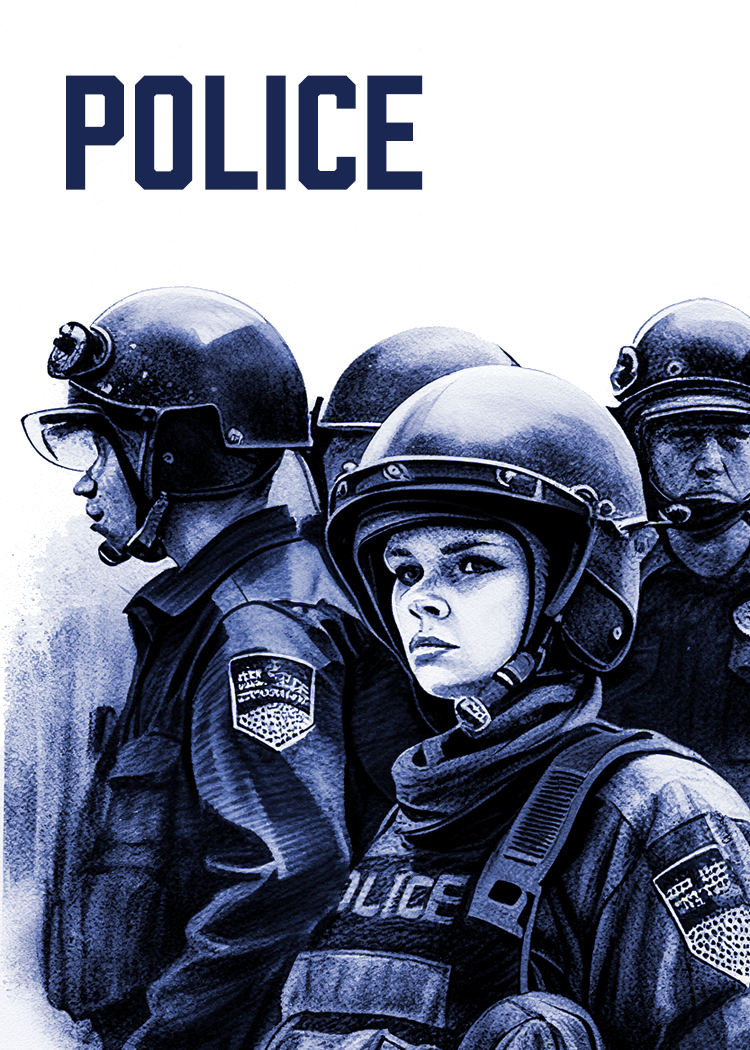
Investigate: Secretly look at one of a target player's face-down cards. The card goes back to them after you see it.
Swap: Draw 1 card from the deck. You may swap it with one of your face-down cards, then return 1 card to the deck. The Police can also block Steal attempts against you.
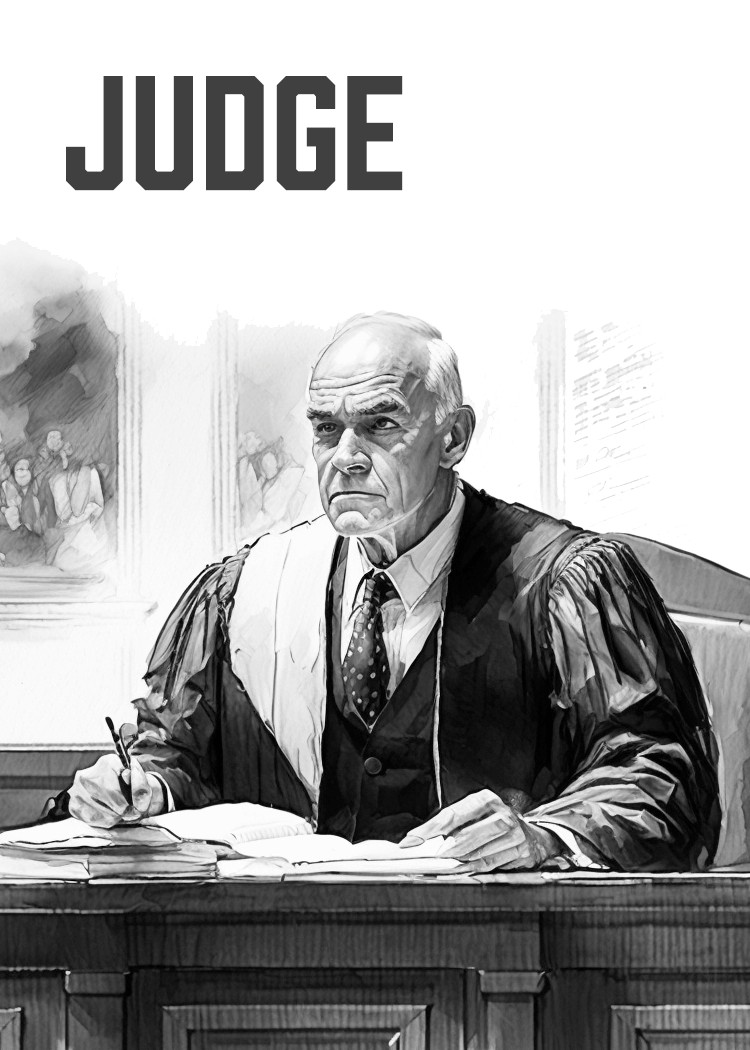
Judge
The targeted player may claim the Judge to block a Hacker.
If you try to block a Hacker by falsely claiming Judge and lose the challenge, you lose 2 influence cards.
Blocking & Challenging
What is Blocking?
A counter-move that interrupts another player's action by claiming to hold the right influence card. Who may block depends on the action:Foreign Aid can be blocked by any player claiming the Banker, whileSteal and Hack can only be blocked by the targeted player.
When your action is blocked, you have two options:
- Accept the block:
Your action is not executed, and your turn ends. The blocker doesn't reveal anything. Their claim stands. - Challenge the block:
If you believe the blocker is bluffing about having the required card, you can challenge them.
What is Challenging?
When you question whether another player actually has the influence card they claim to have when taking an action or blocking.
When you challenge a player:
- If you're right (they were bluffing):
That player loses an influence card of their choice, and the action or counter-action fails. - If you're wrong (they had the card):
YOU lose an influence card. The challenged player then returns their revealed card to the deck, shuffles, and draws a new one. Their action proceeds successfully.
How to Play
Install the Conflictology browser extension from theChrome Web Store.
Once it's installed, click the puzzle icon in the top right corner of your browser, find Conflictology, and pin it for quick access. Then just click the icon anytime to start playing!
Play solo: choosePlay vs Computers, pick 1–5 opponents, and you're in a match immediately. No account, no other players needed.
Play with friends: Create a Game or Join an existing one using a shared code. The host (the one who creates the room) shares this code so others can join. Play while on a video call to fully enjoy the bluffing, reactions, and face-offs! Once there are at least 2 players in the room, the host can start the game.
On your turn, you must take one action:
- Choose an action (basic or character-based)
- Other players may challenge or block (if applicable)
- Resolve any challenges or blocks
- Complete your action (if not prevented)
- Play passes to the next player